
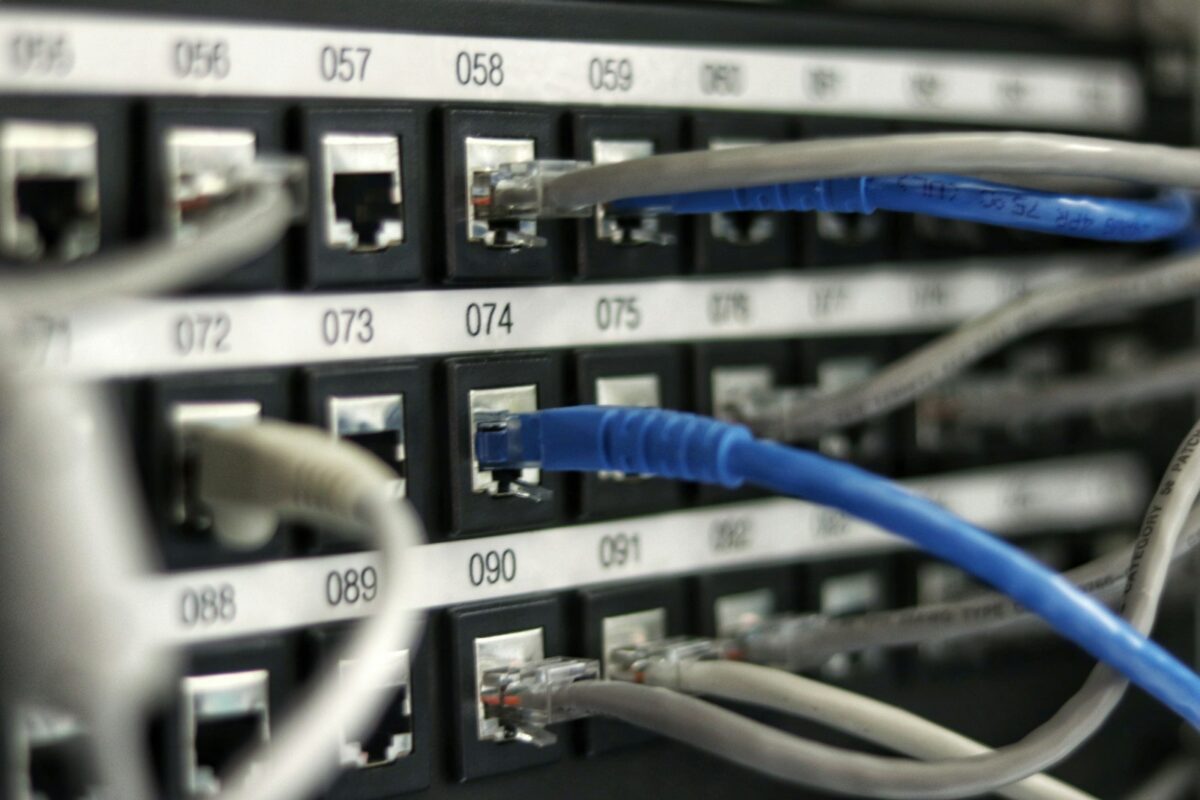
Scaling large language model training beyond single-server constraints introduces complex networking topologies, non-uniform memory access (NUMA) bottlenecks, and devastating gradient communication overheads.
When training models exceeding 70 billion parameters, single-device GPU memory (even on 80GB H100 SXM5 or 141GB H200 accelerators) cannot accommodate the model weights, optimizer states, activations, and gradient buffers simultaneously. Engineering reliable distributed clusters demands a synchronized convergence of PyTorch Fully Sharded Data Parallel (FSDP), DeepSpeed ZeRO memory optimizations, and Ray Train orchestration.
ZeRO Memory Partitioning Architecture
Microsoft’s Zero Redundancy Optimizer (ZeRO) revolutionized distributed deep learning by sharding redundant memory across data-parallel processes rather than replicating identical state across every GPU:
- ZeRO-1 (Optimizer State Partitioning): Shards the FP32 Adam optimizer states (momentum and variance vectors) across GPUs. Achieves up to 4x memory reduction with zero communication penalty.
- ZeRO-2 (Gradient Partitioning): Shards both optimizer states and backward-pass gradients. Each GPU only retains the gradients corresponding to its assigned parameters.
- ZeRO-3 (Parameter Partitioning): Fully shards model weights across all devices. Individual layer parameters are gathered on-the-fly via high-speed all-gather operations during forward/backward passes and promptly discarded from local VRAM.
Communication Fabrics: InfiniBand vs. RoCE v2 Networking
Distributed all-reduce and all-gather operations require massive bidirectional bandwidth to prevent GPU execution bubbles where tensor cores sit idle waiting for network synchronization:
// Network Latency Impact on Model Flops Utilization (MFU)
Inter-GPU Intra-Node: NVLink 4 (900 GB/s bidirectional) -> MFU: ~58%
Inter-Node Fabrics:
  - 8x 400Gb/s Quantum-2 InfiniBand: Tail Latency < 1.2 microseconds
  - RoCE v2 (RDMA over Converged Ethernet): Tail Latency ~ 2.8 microseconds (requires PFC/ECN tuning)
Without hardware-level Priority Flow Control (PFC) and Explicit Congestion Notification (ECN), packet drops on standard Ethernet switches trigger devastating TCP retransmissions, collapsing cluster-wide Model Flops Utilization (MFU) from 55% down to under 20%.
Benchmark: PyTorch FSDP vs. DeepSpeed ZeRO-3 on 64x H100 GPUs
| Distributed Framework | Model Architecture | Model FLOPs Utilization | Throughput (Tokens/GPU/Sec) | OOM Failure Rate |
|---|---|---|---|---|
| PyTorch FSDP (Hybrid Shard) | Llama-3-70B (FP16) | 54.2% | 3,420 | < 0.1% |
| DeepSpeed ZeRO-3 Offload | Llama-3-70B (FP16) | 48.6% | 2,980 | < 0.5% |
| Megatron-LM (TP=8, PP=2, DP=4) | Llama-3-70B (FP16) | 58.4% | 3,710 | < 0.2% |
Production Recommendations for Infrastructure Architects
- Embrace Hybrid Sharding: In clusters exceeding 32 GPUs, implement FSDP’s
HYBRID_SHARDmode. This shards parameters fully within the NVLink domain of individual nodes while executing traditional data parallelism across InfiniBand switches, slashing cross-rack bandwidth consumption by up to 65%. - Integrate Ray Train: Decouple compute hardware orchestration from deep learning training scripts. Ray Train automates spot-instance fault tolerance, elastic worker recovery, and seamless checkpoint streaming directly to S3/GCS.


