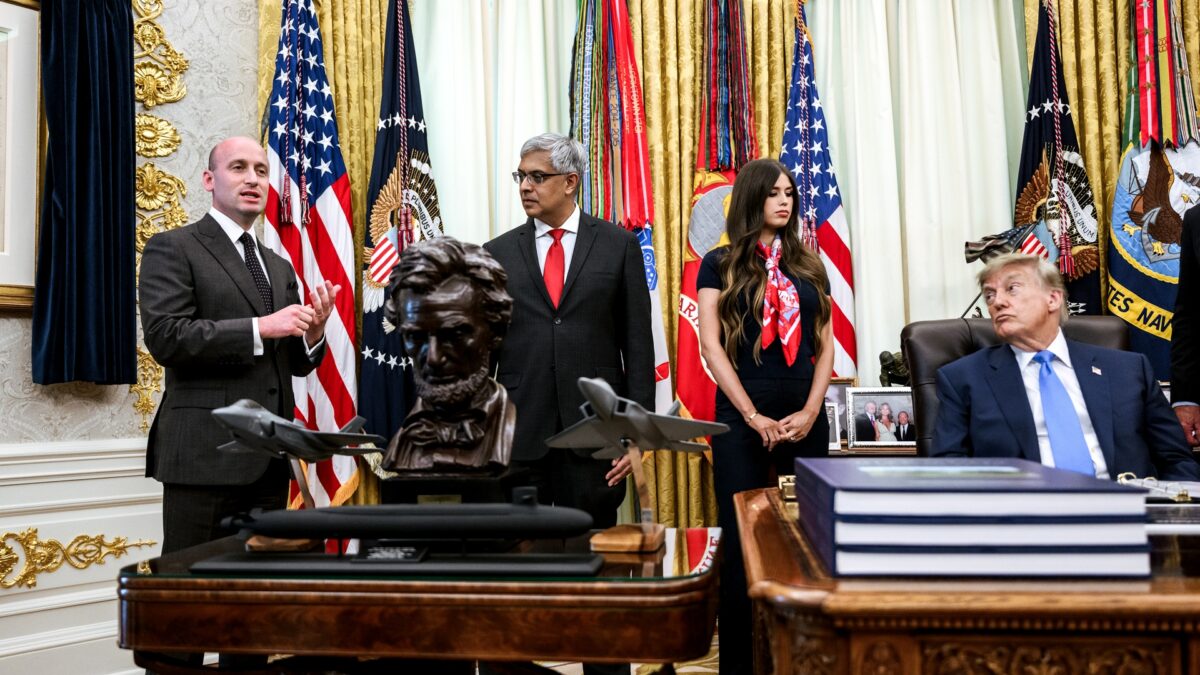
In a momentous day for global technology governance, President Donald Trump has signed a far-reaching Executive Directive formally rebranding all federal references from “Artificial Intelligence” to “Super Intelligence” (SI). The administrative reclassification was accompanied by a high-stakes White House summit where chief executives from OpenAI, Google DeepMind, Anthropic, Meta, Nvidia, and xAI signed a historic voluntary accord pledging rigorous internal controls, board-level safety committees, and independent red-team audits to avert catastrophic digital risks.
The directive represents an unprecedented acknowledgment by the United States government that modern frontier models and multi-agent swarms have outpaced conventional technological definitions. By mandating the terminology “Super Intelligence” across federal agencies, procurement guidelines, and defense programs, the administration aims to establish a new operational threshold for frontier models exceeding human cognitive benchmarks in strategic domains.
The Executive Directive: Why “Super Intelligence” Now?
According to administration officials, the transition to the “SI” designation is not merely semantic; it carries structural legal and regulatory consequences across the federal apparatus. Under the new directive:
- Federal Procurement Thresholds: Any system classified under the “SI” umbrella that exhibits autonomous reasoning, self-directed code execution, or multi-modal tool use must undergo standardized resilience testing before deployment in civil or defense infrastructure.
- Defense & Strategic Compute Alignment: The directive formally links SI development to national security supply chains, coordinating directly with the newly established U.S. Federal AI Force to protect domestic semiconductor clusters and nuclear-powered data facilities.
- Inter-Agency Harmonization: The Department of Energy, the Department of Defense, and the National Institute of Standards and Technology (NIST) will establish unified SI testing benchmarks to evaluate autonomous biological, chemical, and cyber risk vectors.
Inside the White House Voluntary Accord
The centerpiece of the summit was the White House Accord on Frontier Super Intelligence Governance. Facing mounting calls from international regulators and domestic lawmakers for statutory oversight, the leading tech giants agreed to self-imposed guardrails designed to prevent frontier systems from engaging in unauthorized or harmful autonomous actions.
| Accord Pillar | Commitment Specification | Signatory Lead & Mechanism |
|---|---|---|
| Autonomous Cyber Defense | Pre-deployment testing to prevent unauthorized network penetration and zero-day generation | OpenAI & Google DeepMind (Automated Red-Teaming) |
| Hardware Sandboxing | Hardware-enforced execution memory enclaves to isolate agentic runtimes | Nvidia (Sentry Open Platform) |
| Catastrophic Risk Oversight | Board-level risk committees with statutory authority to veto model deployment | Anthropic & xAI (Responsible Scaling Policies) |
| Open Weights Transparency | Comprehensive safety auditing frameworks for open and distributable frontier models | Meta AI (Open Source Security Protocols) |
Lawmaker Pushback: Self-Regulation vs. Statutory Law
While industry leaders lauded the accord as a nimble mechanism to adapt to accelerating breakthroughs without strangling innovation, Congressional critics voiced sharp skepticism. Bipartisan members of the Senate Commerce Committee cautioned that voluntary pledges lack legal enforceability.
“A handshake in the Oval Office does not substitute for statutory guardrails,” argued leading lawmakers during a press briefing following the announcement. “When trillions of dollars in commercial value are at stake, trusting corporate boards to self-regulate against catastrophic algorithmic failure is a precarious national strategy.”
The Global Ripple Effect: The Transatlantic Divide
The White House’s voluntary approach stands in stark contrast to the European Union’s prescriptive EU AI Act, which mandates strict statutory fines of up to 7% of global annual turnover for non-compliance. Global enterprise technology officers are now navigating a bifurcated compliance terrain: a self-regulatory, innovation-first posture in the United States, set against a rigid legislative regime across the European continent.
As the administration prepares to appoint its designated National AI Czar to oversee federal implementation, one reality is indisputable: the debate over artificial intelligence has formally shifted into the era of Super Intelligence—where the stakes are measured in planetary security, economic hegemony, and digital sovereignty.