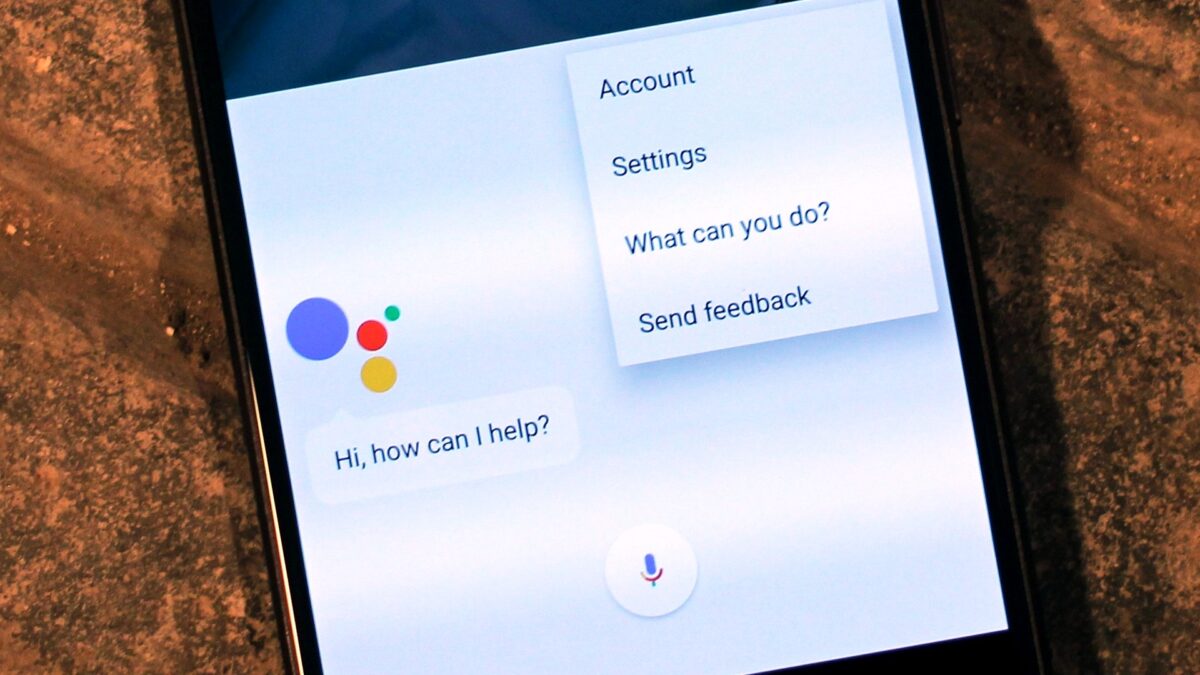
The eight-year reign of Google Assistant as the ubiquitous voice interface across billions of consumer devices has officially reached its final chapter. In an unceremonious server-side rollout accompanied by Google App update v17.62.9, Google has permanently removed the legacy “Switch to Google Assistant” toggle, fully terminating user fallback options and mandating Gemini as the sole, non-negotiable default assistant across Android smartphones, Wear OS smartwatches, connected headphones, and Android Auto vehicles.
The development, first spotted by reports in Droid Life and 9to5Google, marks the culmination of a phased transition Google initiated in August. While Google had previously permitted Android users to revert from Gemini back to the classic Google Assistant within app settings, that bridge has now been permanently dismantled. For Android users worldwide, Google Assistant is no longer an alternative—it is officially gone.
The Removal of the Fallback Toggle: A Quiet Shutdown
Since the initial introduction of Gemini (formerly Bard) on Android, Google maintained a coexistence period. Users who found generative AI models too slow for rapid everyday tasks—such as setting kitchen timers, controlling smart bulbs, or toggling device settings—could navigate to Gemini Settings → Digital Assistants from Google and select “Google Assistant” to restore the legacy, deterministic voice assistant.
With the release of Google App version v17.62.9, this menu has been quietly purged:
- Settings Purge: Searching for “Google Assistant” or “Digital Assistant” within system preferences now directs users strictly to Gemini configuration options.
- Hardware Hotword Re-Routing: The long-press power button gesture, corner-swipe gesture, and “Hey Google” voice triggers on Pixel 11 Pro, Galaxy devices, and third-party Android handsets now summon the Gemini floating overlay exclusively.
- Wearable and Automotive Lock-In: Paired peripherals—including Wear OS smartwatches, Pixel Buds, and vehicles equipped with Android Auto or Google Built-in—automatically inherit the permanent Gemini configuration without any local override setting.
“As we approach the end of September, Google Assistant sure does appear to be gone,” noted Droid Life editor Kellen. “If you were hanging on to the idea that you could readily switch between Assistant and Gemini, you no longer can. We are officially stuck on Gemini going forward.”
Architectural Evolution: Deterministic Heuristics vs. Generative LLMs
To understand why Google terminated Assistant, one must examine the fundamental architectural divide between 2016-era voice systems and modern frontier intelligence. Legacy Google Assistant relied on rigid, hand-crafted Natural Language Understanding (NLU) parsers paired with deterministic intent-action trees. If a user command matched a known intent slot (e.g., SetTimerIntent(duration=300)), execution was instantaneous and near-flawless.
However, legacy Assistant could not reason, synthesize cross-document information, or interpret visual context. By contrast, Google Gemini is built on multimodal large language models operating through hybrid on-device (Gemini Nano) and cloud inference (Gemini Pro/Flash). This transition reflects a broader shift across the industry, similar to our technical exploration of local LLM quantization and edge inference acceleration.
Feature Matrix: Google Assistant Legacy vs. Gemini Default
| Capability Dimension | Legacy Google Assistant (2016–2026) | Gemini Mandatory Default (Current) |
|---|---|---|
| Underlying Architecture | Slot-filling NLU & Intent Decision Trees | Multimodal LLM (Gemini Nano / Pro) |
| Basic Command Latency (Timers / Alarms) | Sub-150ms (Deterministic Offline) | 350ms–700ms (LLM Token Generation) |
| Multimodal & Screen Awareness | None (OCR snippet text only) | Full Visual & PDF Ingestion (“Ask this screen”) |
| Complex Reasoning & Synthesis | Fails on multi-clause questions | Multi-step chain-of-thought & code execution |
| Smart Home Routine Stability | High (Legacy Nest integrations) | Maturing (Migrating to Gemini for Home) |
User Friction: The Growing Pains of Mandatory Generative AI
While power users praise Gemini’s ability to summarize lengthy email threads, draft messages, and analyze documents on the fly, everyday consumers have expressed vocal frustration with the removal of Assistant. The primary grievances center around responsiveness and simplicity:
- Conversational Overhead: Where Google Assistant would silently execute a command like “turn off the living room lights,” Gemini occasionally generates conversational confirmations or brief delays while processing token embeddings.
- Lock-Screen Inconsistencies: Running resource-heavy agentic queries from a locked smartphone introduces authentication hurdles that did not exist with simple voice-matched Assistant intents.
- Smart Home Integration Gaps: While Google has initiated “Gemini for Home” to upgrade Nest speakers and displays, certain legacy Routines and third-party smart home hardware still exhibit occasional parsing glitches under LLM routing.
The Sunset of an Era: What This Means for Big Tech’s Voice Race
The definitive shutdown of Google Assistant is a symbolic milestone for Silicon Valley. It marks the formal death of the first voice assistant generation—the era that began with Siri in 2011, Google Assistant in 2016, and Amazon Alexa. For years, tech giants struggled to monetize these simple command-and-control interfaces.
By forcing the entire Android ecosystem onto Gemini, Google is positioning itself aggressively against Apple Intelligence and OpenAI’s Advanced Voice Mode. Google is betting that consumers will tolerate minor latency trade-offs on simple alarms in exchange for an assistant capable of understanding complex human thoughts, seeing through device cameras, and taking multi-step autonomous actions. Google Assistant had an extraordinary run—but the future belongs definitively to generative agents.