Developer Infrastructure Executive Summary
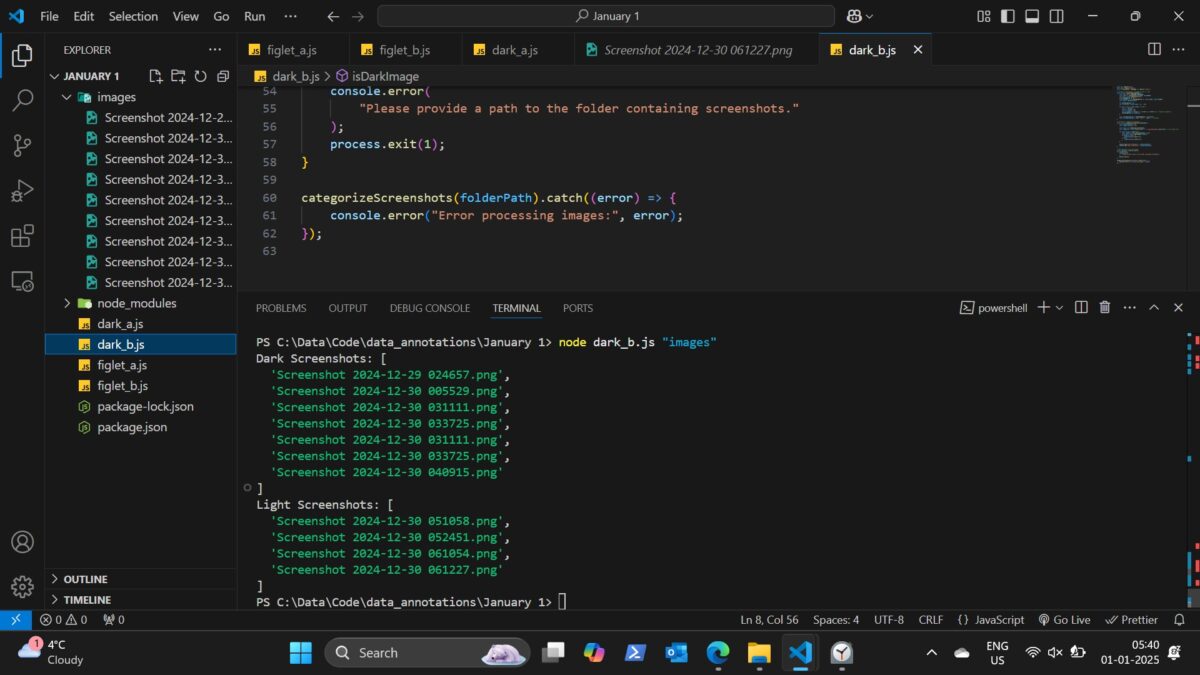
The classical software development lifecycle—authoring code in an editor, committing to version control, awaiting remote CI/CD linter passes, and debugging test failures—is undergoing its most radical transformation since the invention of compilers. Modern Agentic IDEs operate as active pair-programmers with root filesystem privileges, executing continuous background sandbox environments that write, test, debug, and verify production code in real-time.
For decades, developer productivity tools were strictly passive: linters flagged missing semicolons, static analysis caught unused variables, and code completion guessed the next function parameter. Today, unified autonomous runtimes—empowered by standardized protocols as detailed in our coverage of cross-platform agent interoperability and MCP standards—are executing iterative test-driven development loops directly inside ephemeral container sandboxes.
1. The Transition from Copilot Autocomplete to Agentic Self-Healing
Passive AI code generators suffered from a fatal flaw: hallucinated imports, subtly broken edge cases, and deprecation mismatches. Because the model generated code without observing runtime feedback, the burden of verification remained 100% on the human engineer.
In an agentic IDE architecture, the execution loop is closed:
- Hypothesis Generation: The agent analyzes the repository dependency graph and drafts an initial implementation or bugfix.
- Ephemeral Execution: The runtime invokes local sandboxes (Docker, WebAssembly, or Linux namespaces) to build and run test suites.
- Trace Diagnostics: If a test fails or a panic occurs, stdout/stderr logs are fed directly back into the model’s context window.
- Iterative Mutation: The agent refactors the code until all unit tests pass and code coverage thresholds are met.
2. The Disruption of Traditional CI/CD Pipelines
In legacy enterprise workflows, developer pull requests trigger automated GitHub Actions or Jenkins pipelines that run for 15 to 45 minutes before reporting failure. This asynchronous feedback cycle destroys developer flow state.
By shifting the verification step from remote centralized cloud runners into real-time local agentic loops, code reaching the repository is pre-verified, pre-linted, and pre-benchmarked. The traditional concept of a “failing build” in CI is transformed into an instantaneous, pre-commit self-correction event.
| Workflow Stage | Traditional CI/CD Pipeline | Autonomous Agentic IDE |
|---|---|---|
| Error Detection | Post-commit via remote runner | Instantaneous in local sandbox |
| Fix Implementation | Manual developer context switch | Automated multi-turn self-healing |
| Test Authoring | Often skipped or manually mocked | Auto-generated property-based tests |
3. The Future: Software Engineering as High-Level Orchestration
As demonstrated in our previous deep-dive on Gemini vs. OpenAI Codex cloud developer architectures, the value proposition of software engineers is rapidly ascending from mechanical syntax typing to system architecture specification, invariant verification, and security guardrail auditing. The developer of 2026 is no longer a code typist—they are the chief architect of an autonomous software engineering workforce.