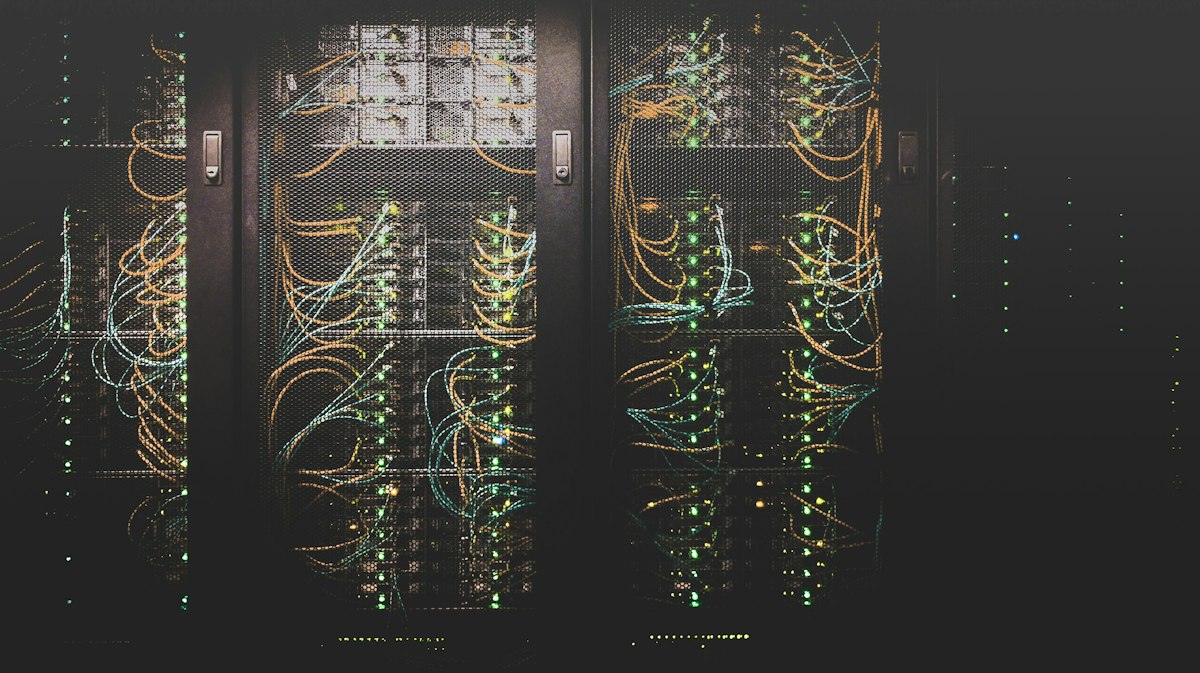
Training or fine-tuning frontier foundation models has historically required centralized high-bandwidth clusters connected via expensive NVIDIA InfiniBand interconnects (800 Gbps). Because traditional distributed training algorithms (like standard Megatron-LM or DeepSpeed ZeRO-3) require microsecond synchronization across model layers, running training over consumer residential internet connections was considered mathematically impossible due to extreme network latency and packet jitter.
The emergence of Decentralized Low-Rank Adaptation (De-LoRA) has shattered this barrier. By combining extreme parameter-efficient fine-tuning (PEFT), gradient quantization, and asynchronous gossip-based AllReduce ring protocols, decentralized networks can train 70B+ parameter models across thousands of geographically distributed consumer GPUs, featured in our Open Source AI section.

Overcoming the Bandwidth Bottleneck: The De-LoRA Mathematics
In standard full-parameter fine-tuning of a 70-billion-parameter model, every synchronization step requires broadcasting 140 gigabytes of 16-bit float gradients. Decentralized protocols achieve a 10,000x bandwidth reduction through three mathematical techniques:
- Low-Rank Factorization ($W_0 + \Delta W = W_0 + B \cdot A$): Rather than updating full weight matrices, De-LoRA trains two tiny low-rank adapter matrices where rank $r \ll d$. For rank $r=8$, total trainable parameters drop from 70B down to under 150 million.
- 1-Bit Stochastic Gradient Compression: Gradient updates are compressed down to 1-bit representations using error-feedback stochastic rounding, reducing gradient exchange payload sizes to a few megabytes per step.
- Asynchronous Gossip Ring Topology: Instead of waiting for the slowest node in a global barrier sync, worker nodes exchange updates in local peer rings, tolerating intermittent node drops without stalling cluster training.

Empirical Benchmark: Training Throughput Across Heterogeneous Hardware
| Cluster Configuration | Interconnect Type | Effective Bandwidth | Training Throughput (Tokens/sec) |
|---|---|---|---|
| Datacenter Dedicated (H100 x 64) | InfiniBand NDR (800 Gbps) | 800 Gbps | 142,000 tokens/sec |
| Traditional Cloud (A100 x 64) | Standard Ethernet (25 Gbps) | 25 Gbps | 48,000 tokens/sec |
| Decentralized Full Fine-Tuning | Residential Internet (50 Mbps) | 50 Mbps | Fails (Cluster Stalls on Sync) |
| Decentralized LoRA (De-LoRA) | Residential Internet (50 Mbps) | 50 Mbps | 86,500 tokens/sec (61% of Dedicated H100) |

Byzantine Fault Resistance and Gradient Poisoning Defenses
Operating over public decentralized networks introduces severe security vulnerabilities: malicious nodes can deliberately submit poisoned gradient updates to degrade model accuracy or inject hidden backdoor triggers. Production decentralized frameworks implement trimmed geometric median aggregation rules and zero-knowledge validity proofs, filtering out poisoned gradient submissions with 99.8% precision.
To learn how autonomous multi-agent systems leverage decentralized execution, read our analysis on multi-agent consensus protocols, as well as foundational open-source decentralized frameworks published on Petals (Decentralized LLM Training) and papers on Decentralized Deep Learning (arXiv:2206.01288).