In an uncompromising strategic answer to escalating corporate anxiety surrounding proprietary code leakage, intellectual property infringement, and public cloud security exposure, IBM has officially launched the self-hosted, on-premise enterprise edition of “IBM Bob”—an end-to-end autonomous agentic software development, refactoring, and engineering platform. The release marks a defining watershed in enterprise generative computing, empowering Fortune 500 multinationals, defense contractors, healthcare conglomerates, and Tier-1 financial institutions to deploy autonomous multi-agent developer swarms entirely behind corporate firewalls and within strictly air-gapped data centers.
While consumer-facing frontier model labs have aggressively pushed organizations toward shared, multitenant public cloud APIs, enterprise Chief Information Officers (CIOs) and Chief Information Security Officers (CISOs) have pushed back vigorously against streaming sensitive architectural blueprints, trade-secret microservices, and core banking transaction kernels over public network pipes. With IBM Bob’s sovereign, self-hosted architecture, enterprises can harness the exponential velocity of autonomous software engineering while preserving absolute architectural sovereignty.
Autonomous Multi-Agent Architecture: How “IBM Bob” Operates
Unlike conventional first-generation developer copilots that operate as passive, autocomplete extensions inside an integrated development environment (IDE), IBM Bob represents an asynchronous, goal-oriented agentic runtime. When an enterprise engineering ticket is assigned to Bob—whether modernizing a 40-year-old COBOL transaction engine into cloud-native Java microservices or autonomously isolating and patching a distributed zero-day dependency vulnerability—the system decomposes the overarching objective into parallelized, specialized sub-agent nodes:
- Architectural Scoping & Dependency Graph Agent: Constructs a comprehensive semantic knowledge graph of the entire internal enterprise repository ecosystem. It maps circular dependencies, legacy API contracts, and internal database schemas without being constrained by the token context window limits of commercial public APIs.
- Implementation & Refactoring Agent: Autonomously drafts production-grade pull requests strictly aligned with enterprise-specific coding standards, internal design systems, custom internal frameworks, and corporate architectural guidelines.
- Synthetic Test Synthesis & Sandboxed Execution Agent: Automatically synthesizes exhaustive unit, integration, and regression test suites. The agent launches local ephemeral microVM sandboxes to execute test runners, measuring branch and statement coverage and iterating on test failures until 100% test integrity is verified before presenting the PR to human engineers.
- Static Analysis & Security Compliance Agent: Runs continuous static and dynamic application security testing (SAST/DAST), verifying newly generated code against OWASP Top 10 guidelines, NIST 800-53 standards, and corporate credential-leak prevention policies.
- CI/CD Pipeline Repair & Deployment Agent: Intercepts build breakages in Jenkins, GitLab CI, and GitHub Actions, analyzing stack traces in real time, drafting automated configuration remediation commits, and running canary deployments.
Legacy Mainframe Modernization: The COBOL to Cloud-Native Transition
One of the primary enterprise drivers accelerating IBM Bob’s adoption is the mounting crisis of legacy core mainframe systems. Global banking, insurance, and federal governance infrastructure still rely on billions of lines of legacy COBOL and PL/I code running on enterprise mainframes. With experienced mainframe systems engineers rapidly retiring, enterprises face massive operational fragility.
IBM Bob introduces specialized Mainframe Translation Agents capable of parsing legacy copybooks, data division layouts, and hierarchical database schemas (such as IMS and VSAM). Rather than performing blunt, line-by-line transpilation that produces unmaintainable spaghetti code, Bob reverse-engineers the underlying business logic and state machine rules, re-architecting the application into event-driven microservices using modern Java, Go, or Python. Furthermore, Bob automatically implements distributed transaction patterns (such as the Saga Pattern) to replace legacy Two-Phase Commit (2PC) protocols without introducing data inconsistencies across distributed ledgers.
Private Silicon & Red Hat OpenShift Integration
To deliver deterministic low latency without cloud dependencies, IBM Bob is packaged as a turnkey containerized platform running atop Red Hat OpenShift. Enterprise customers can deploy the agent runtime across bare-metal Nvidia HGX H100/H200 GPU clusters, AMD Instinct MI300X accelerators, or IBM Cloud Satellite hybrid infrastructure.
At the foundation model layer, Bob leverages optimized, quantized editions of IBM’s open-source Granite 3.0 code models, fine-tuned specifically for enterprise systems architecture, multi-language translation, and vulnerability remediation. By executing inference locally, organizations circumvent per-token cloud metering while unlocking uncapped background agent compute cycles.
Architectural Matrix: Public Cloud Copilots vs. On-Premise Agent Runtimes
| Capability Dimension | Public Cloud Developer Assistants (Copilot / Dots) | Self-Hosted Sovereign Platform (IBM Bob) |
|---|---|---|
| Data Sovereignty | Code transmitted to third-party multitenant cloud datacenters | 100% On-Premise / Air-gapped datacenter isolation |
| Execution Runtime | Shared multitenant public cloud infrastructure | Dedicated private Red Hat OpenShift bare-metal clusters |
| Context Horizon | Sliding token window with external vector RAG | Full persistent internal repository dependency graph |
| Regulatory Compliance | Complex SOC2 / cloud vendor audit agreements | Native compliance with ITAR, HIPAA, GDPR, & DORA |
| Cost Predictability | Volatile per-token operational expenditure (OpEx) | Fixed hardware CapEx with unlimited inference cycles |
Zero-Trust Access Control & Cryptographic Auditability
A primary failure mode of experimental agentic coding tools is the hallucination of non-existent packages (slopsquatting vulnerabilities) and unauthorized privilege escalation. In regulated banking environments subject to the European Union’s Digital Operational Resilience Act (DORA) and federal regulatory oversight, letting an autonomous model touch production repositories without cryptographic verification is non-negotiable.
IBM Bob enforces an immutable, zero-trust audit trail. Every single Git commit, branch creation, dependency update, and test execution executed by a Bob agent is cryptographically signed using Hardware Security Module (HSM) keys managed via internal enterprise public key infrastructure (PKI). Human senior developers retain definitive veto power: Bob operates under configurable boundary guardrails, automatically requesting cryptographic biometric multi-factor authentication (MFA) before any PR touching production databases or payment gateways can be merged.
Total Cost of Ownership & The Enterprise Sovereignty Movement
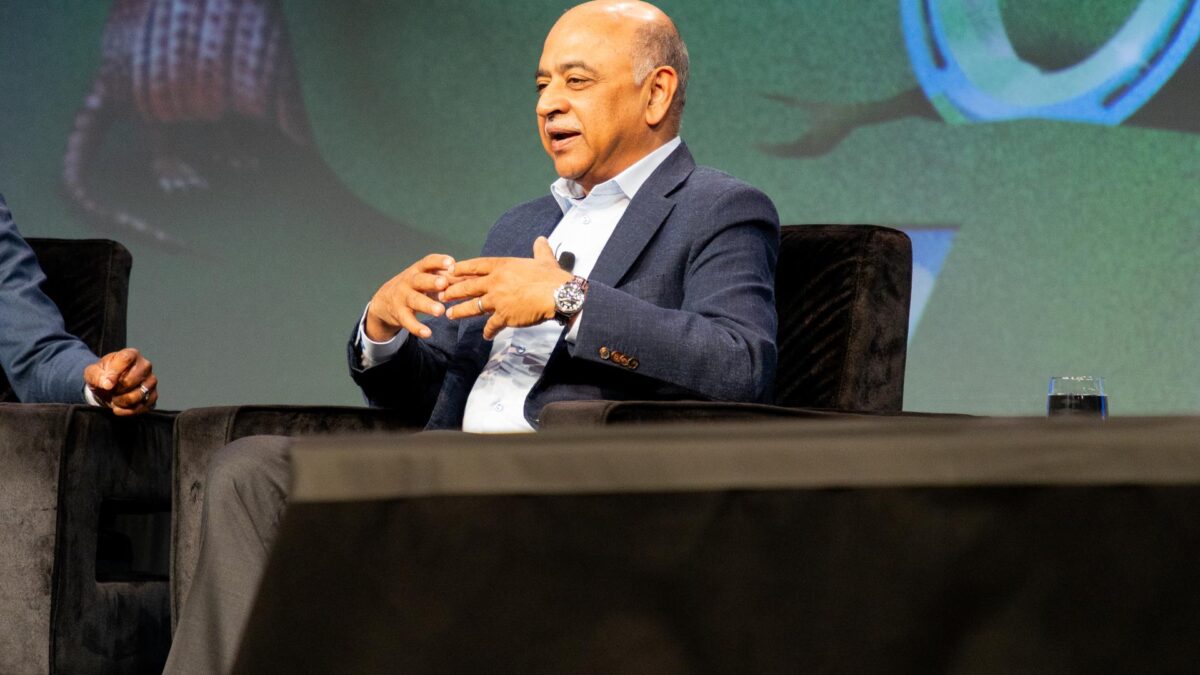
Speaking at the launch symposium, IBM Chairman and Chief Executive Arvind Krishna underscored that the economics of generative AI development are fundamentally changing as agents shift from simple query responses to persistent, always-on operations.
“When you transition from answering interactive chat queries to running continuous autonomous agents that refactor millions of lines of code every single night, public cloud per-token API billing becomes economically ruinous,” Krishna stated. “IBM Bob delivers guaranteed cost predictability, cryptographic data isolation, and total IP control. In the age of agentic software engineering, your competitive advantage is your codebase—and that codebase must never leave your premises.”
Early enterprise adopters across global investment banking, aerospace defense, and telecommunications report dramatic productivity dividends, including a 42% reduction in legacy migration cycle times and an 80% reduction in vulnerability remediation lag. As sovereign AI laws proliferate worldwide and geopolitical data fragmentation intensifies, IBM Bob cements Big Blue’s posture as the definitive provider of private, compliant enterprise intelligence.