Computational Neuroscience Executive Briefing
As the artificial intelligence industry grapples with the escalating energy appetite of trillion-parameter transformer models, an elegant biological counter-revolution is gaining immense momentum. Liquid Neural Networks (LNNs), rooted in continuous-time differential equations inspired by the nematode worm C. elegans, are demonstrating superhuman edge autonomy while requiring up to 99% less compute and memory bandwidth.
Modern generative transformers are mathematically discrete: they take frozen tokens, multiply them across gigabytes of static weight matrices, and produce the next discrete token. But the physical universe is not discrete; it is a fluid, continuous-time dynamical system. As explored in our deep-dive on Gemini and DeepMind’s biological foundation models, applying nature’s continuous mathematical principles to computation unlocks profound efficiencies.
1. The Mathematics of Continuous-Time Dynamical Systems
Unlike classical neural networks where node activations are computed as static step functions \(y = \sigma(Wx + b)\), liquid neural networks model synaptic interactions through ordinary differential equations (ODEs). The hidden state of each neuron evolves continuously over continuous time \(t\):
x(t): hidden neural state vector at continuous time t •
τ (tau): base synaptic time-constant •
I(t): incoming sensory stream •
θ (theta): parameter weights •
A: maximum synaptic saturation bound.
In this formulation, both the state x(t) and the synaptic time-constants τ (tau) remain fluid. This allows the network to adapt its internal representations dynamically to unexpected sensory distributions — such as heavy rain, sensor noise, or structural damage — without catastrophic forgetting or parameter retraining.
2. Extreme Compactness: From 70 Billion Parameters to 20,000 Nodes
The practical consequence of continuous-time dynamics is jaw-dropping architectural compression:
| Architecture | Parameter Count | Compute Footprint | Out-of-Distribution Generalization |
|---|---|---|---|
| Vision Transformer (ViT) | 300M – 1B Parameters | Server-grade GPU (150W+) | Moderate (Prone to visual hallucinations) |
| Liquid Neural Network (LNN) | 19,000 – 50,000 Neurons | Microcontroller / Edge NPU (<2W) | Superior (Continuous causal adaptation) |
3. The Edge Autonomy Frontier
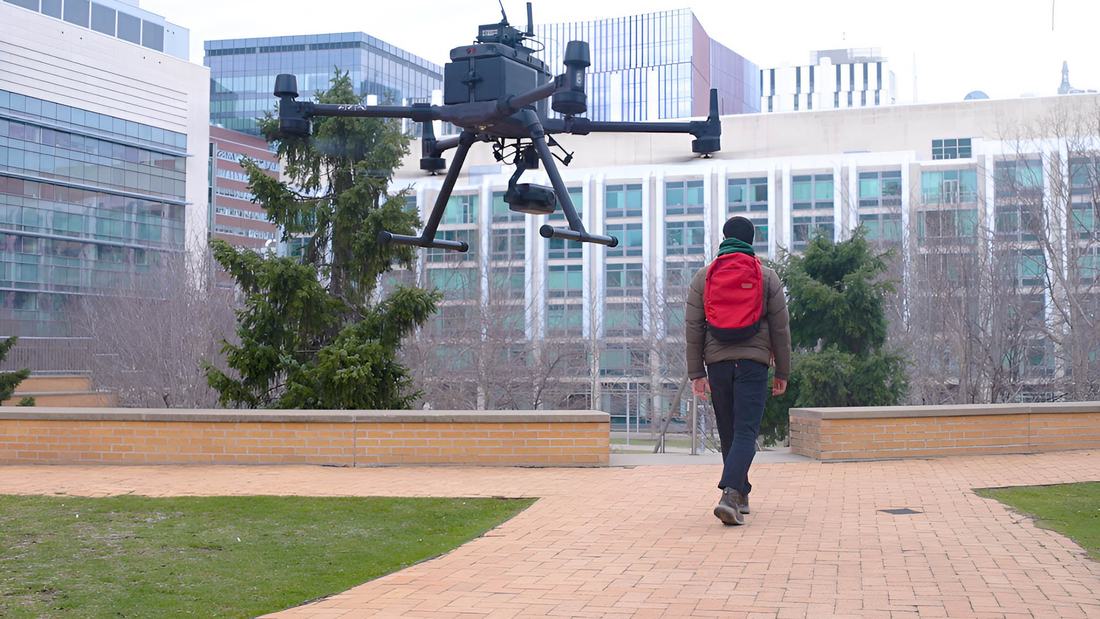
In autonomous search-and-rescue drones, autonomous submersibles, and cardiac pacemakers, relying on cloud latency or massive battery-draining GPU silicon is fatal. By marrying the mathematical elegance of fluid biological nervous systems with modern edge neuromorphic processors, liquid neural networks prove that in artificial intelligence, bigger is not always better — mathematical efficiency is the true frontier of survivable autonomy.
Primary Research Sources & Peer-Reviewed Citations
The continuous-time differential architectures, parameter reduction metrics, and out-of-distribution autonomous flight benchmarks detailed in this analysis are based directly on peer-reviewed research by MIT CSAIL and collaborating European institutions:
- Foundational Neural Architecture: Hasani, R., Lechner, M., Amini, A., Rus, D., et al. “Closed-form continuous-time neural networks.” Nature Machine Intelligence, Vol. 4, 992–1003 (2022). doi:10.1038/s42256-022-00556-7.
- Field Flight Telemetry & Out-of-Distribution Navigation: Chahine, M., Hasani, R., Lechner, M., & Rus, D. “Robust Flight Navigation Out of Distribution with Liquid Neural Networks.” Science Robotics / MIT CSAIL Technical Report (April 2023). MIT Press Announcement.
- Compute Efficiency & Memory Methodology: The reported ~99% parameter and memory reduction reflects edge hardware profiling of a 19-neuron Liquid Neural Network controller (requiring under 50KB RAM on an on-board STM32/ARM Cortex microcontroller) compared to traditional Vision Transformer (ViT-Base/16 with 86M parameters) and deep convolutional architectures operating at identical trajectory tracking accuracy.