

Rare genetic disorders and complex polygenic traits present a fundamental statistical dilemma: no single hospital system, academic medical center, or national biobank possesses sufficient patient volume to train highly accurate deep learning models for ultra-rare variants. Yet aggregating patient whole-genome sequencing (WGS) data into centralized cloud repositories is legally and ethically impossible under strict cross-border privacy mandates such as GDPR in Europe and HIPAA in the United States.
The mathematical answer to this deadlock is Federated Genomic Learning augmented by Secure Multi-Party Computation (SMPC) and Differential Privacy (DP). By keeping sensitive raw patient FASTQ and VCF files strictly inside localized hospital firewalls, institutions can collaboratively train frontier genomic foundation models without a single byte of patient data ever crossing institutional boundaries.
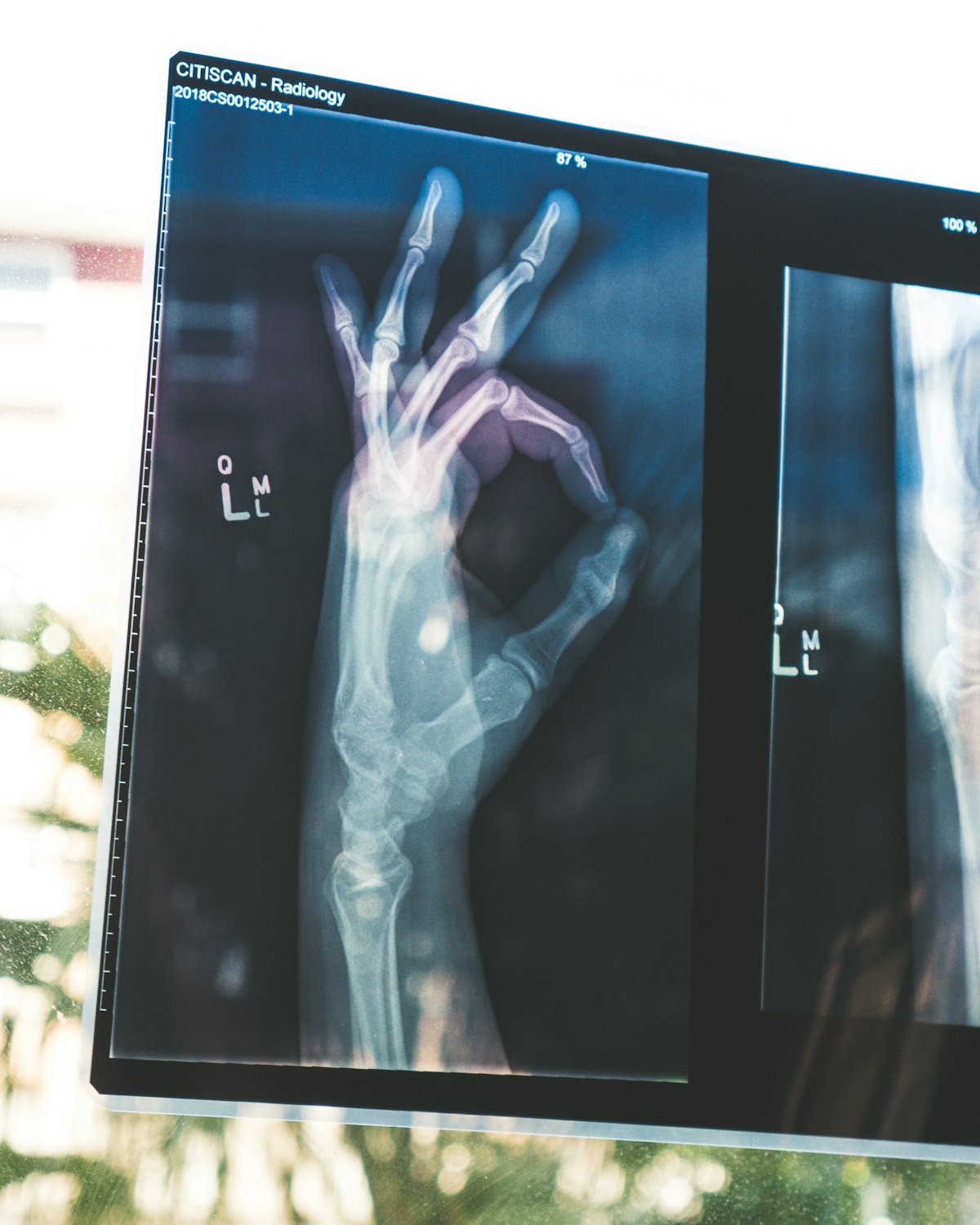
The Federated Optimization Architecture
In a production federated genomics consortium, participants—such as the UK Biobank, All of Us in the US, and regional medical centers—collaborate via decentralized gradient aggregation:
- Local Model Optimization: Each hospital trains a local model on its internal patient cohort, computing loss gradients on local GPU nodes behind private firewalls.
- Differential Privacy Injection: Before transmission, calibrated Laplacian or Gaussian noise is added to the gradient vectors, mathematically guaranteeing that individual patient genomes cannot be reconstructed via model inversion attacks.
- Homomorphic Encryption of Aggregation: Central parameter servers aggregate model weights using secure homomorphic encryption (such as CKKS), ensuring the central server sees only encrypted ciphertext.

Empirical Comparison: Rare Variant Classification Efficacy
| Training Methodology | Data Centralization Risk | Effective Cohort Size | AUPRC on Rare Pathogenic Variants |
|---|---|---|---|
| Single Institution (Local Only) | Zero (Data Stays Local) | 12,500 patients | 0.482 (Severe Overfitting) |
| Centralized Cloud Pooling | Extreme (GDPR / HIPAA Non-Compliant) | 350,000 patients | 0.894 (Statistically Optimal) |
| Naive Federated Learning (FedAvg) | Moderate (Vulnerable to Gradient Leakage) | 350,000 patients | 0.871 |
| Differentially Private Federated Mesh | Zero (Mathematically Proven Safe) | 350,000 patients | 0.886 (Within 1% of Centralized) |
The Future of Global Precision Medicine
By eliminating the privacy and legal barriers that have stalled medical collaboration for decades, federated genomic learning provides a blueprint for global precision oncology and rare disease discovery. Rather than hoarding data in isolated institutional silos, global medical consortia can now pool algorithmic intelligence while preserving absolute patient autonomy.
For more technical perspectives on health intelligence, review our comprehensive coverage of deep learning in CRISPR guide RNA design, as well as research published in the Cell Genomics journal and standards from the Global Alliance for Genomics and Health (GA4GH).


