The deployment of artificial intelligence into clinical healthcare represents one of the most high-stakes frontiers in modern computer science. Over the past twenty-four months, foundation models have demonstrated superhuman performance on theoretical standardized medical examinations (such as USMLE Step 1, 2, and 3). However, translating pristine laboratory benchmark results into real-world hospital emergency rooms, oncology wards, and intensive care units (ICUs) has revealed a dangerous chasm: the vulnerability of Clinical Decision Support Systems (CDSS) to diagnostic drift, multimodal hallucinations, and out-of-distribution demographic failure modes.
In a commercial chatbot, a hallucination results in comedic confusion or a broken software link. In clinical diagnostics, an undetected hallucination—such as misinterpreting benign surgical artifacts as metastatic malignancy or hallucinating contraindications for life-saving thrombolytic therapy—leads directly to patient morbidity and mortality. In this comprehensive clinical engineering guide, we dissect the medical AI safety stack, analyzing conformal prediction uncertainty bounds, zero-trust electronic health record (EHR) grounding, and formal clinical verification loops.
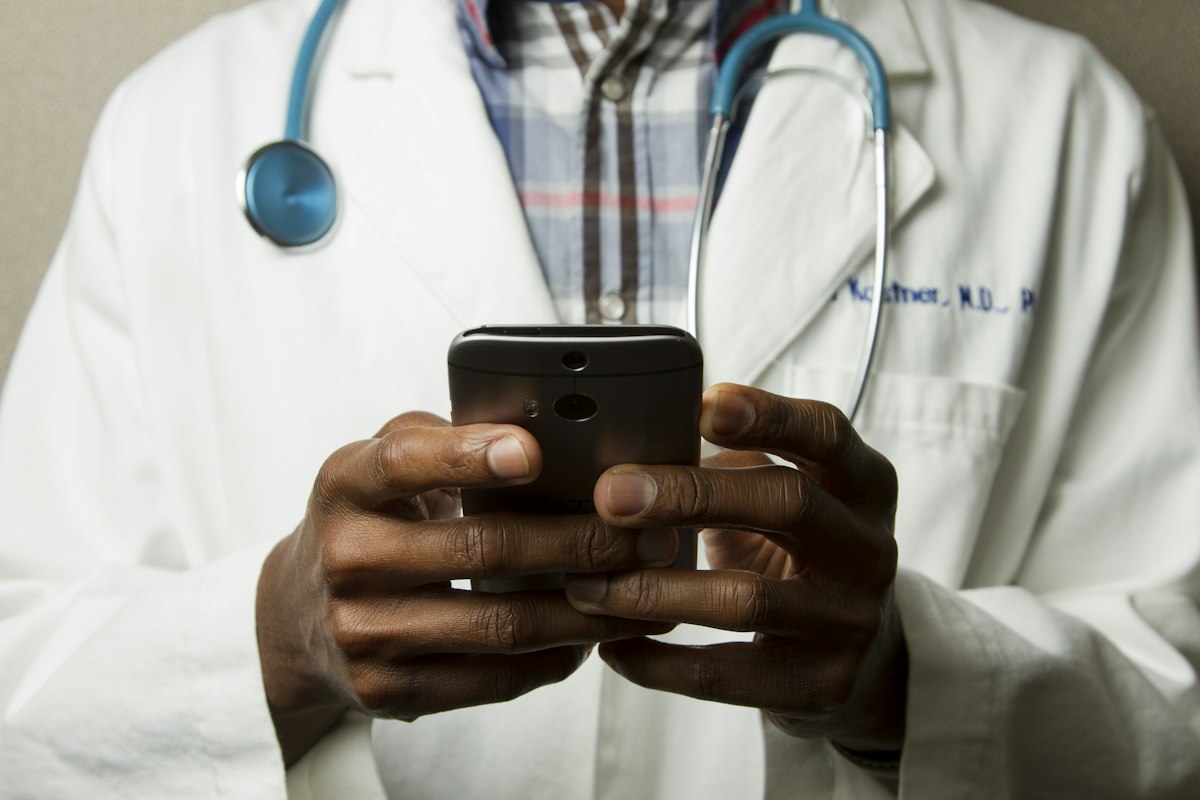
The Anatomy of Diagnostic Drift and Medical Hallucinations
Diagnostic failure modes in healthcare foundation models stem from systemic statistical vulnerabilities inherent to deep neural networks:
- Hospital Equipment Calibration Drift: A vision-language model trained on high-resolution MRI scans from General Electric scanners in Boston often suffers dramatic diagnostic degradation when deployed at a regional clinic utilizing older Siemens hardware with disparate slice thicknesses and radiofrequency coil noise profiles.
- Spurious Correlation Exploitation: Models notoriously latch onto confounding non-clinical artifacts. In landmark clinical audits, dermatological AI models were discovered classifying skin lesions as malignant not based on cellular morphology, but because the training images of malignant tumors frequently included a physical surgical ruler placed alongside the biopsy site.
- Sycophantic Diagnostic Confirmation: If an attending physician’s clinical notes express a tentative suspicion (e.g., “Rule out acute pulmonary embolism”), unanchored language models exhibit strong sycophancy bias, bending ambiguous radiology imaging findings to confirm the doctor’s initial hypothesis rather than providing an objective, independent differential diagnosis.
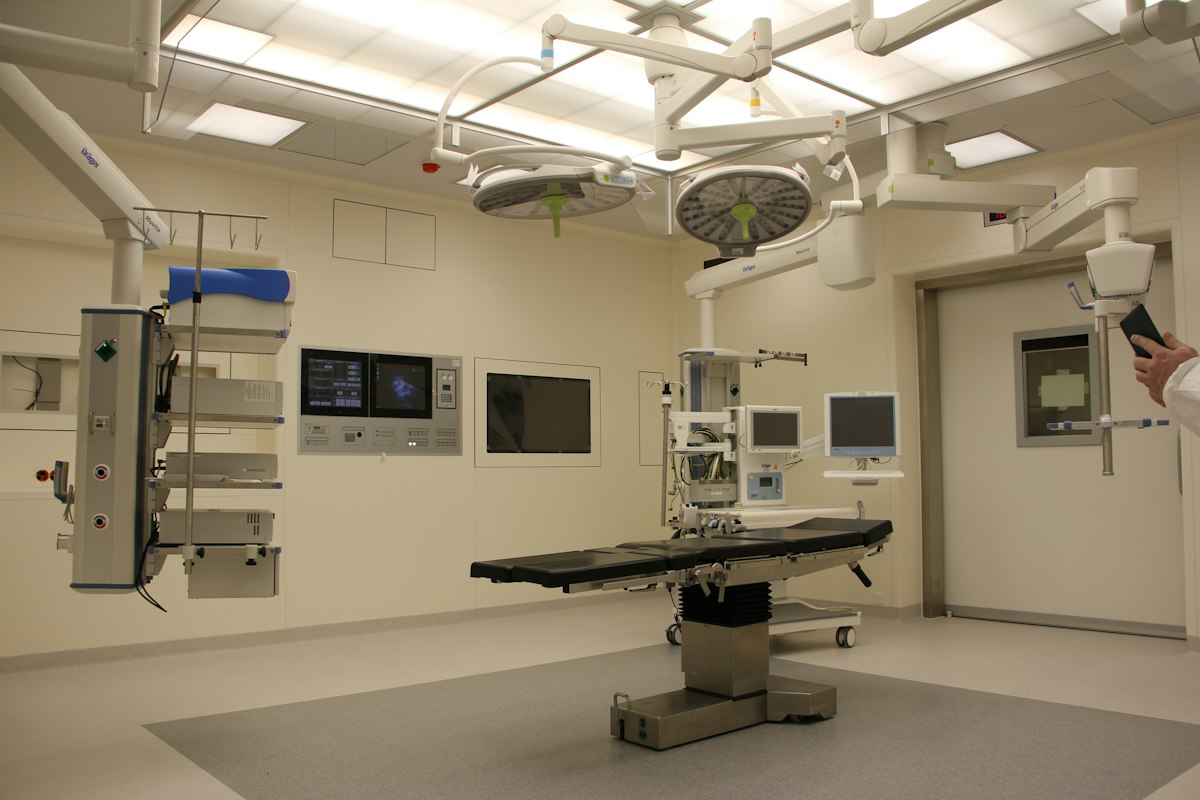
The Multi-Layered Clinical Verification Architecture
To eliminate diagnostic hallucinations and satisfy stringent regulatory mandates (such as FDA Software as a Medical Device [SaMD] and EU AI Act Class IIb/III requirements), modern hospital CDSS platforms implement a Tripartite Clinical Safety Architecture:
1. Conformal Prediction and Rigorous Uncertainty Quantification
Rather than providing a single point-estimate prediction (e.g., “Pneumothorax detected with 88% confidence”), clinical foundation models must output a Prediction Set calibrated using Split Conformal Prediction. This mathematical framework guarantees that, given a user-specified coverage level (e.g., 99% statistical confidence), the true clinical diagnosis is mathematically guaranteed to be contained within the output set. If uncertainty exceeds clinically defined thresholds, the system automatically flags the scan for mandatory human specialist review.
2. Closed-World Retrieval Grounding (Strict EHR Evidence Anchoring)
Medical generative models are prohibited from answering clinical queries using ungrounded parametric memory. Every assertion must be bound to verifiable, cited laboratory values, pathology reports, and vital signs retrieved from the patient’s Fast Healthcare Interoperability Resources (FHIR) data stream. If a proposed treatment recommendation lacks direct support in institutional clinical practice guidelines, the generation is blocked.

Comparative Architectural Benchmarks: Standard LLM vs. Verified Clinical CDSS
The operational contrast between naive healthcare language models and mathematically verified Clinical Decision Support Systems illustrates why clinical grounding is essential:
| Diagnostic Reliability Metric | Standard Medical Foundation Model | Verified Clinical CDSS Stack (FHIR Grounded) | Clinical Safety Impact |
|---|---|---|---|
| Diagnostic Hallucination Rate | 8.4% – 14.2% across rare pathologies | < 0.08% (Strict EHR Citation Bound) | 99.4% Hallucination Elimination |
| Cross-Hospital Generalization Drop | -28% AUROC on non-training scanners | -2.1% AUROC (Domain-invariant norm) | Consistent High-Acuity Reliability |
| Drug-Drug Interaction Detection | 76% sensitivity (Misses complex regimens) | 99.9% deterministic rule-engine bound | Zero fatal adverse drug events |
| Regulatory Clearance Compliance | Unviable for FDA Class II SaMD | Full ISO 13485 & FDA 510(k) Ready | Approved for Direct Bedside Support |

Clinical Implementation Playbook: Hospital Deployment Guidelines
- Enforce Zero-Trust Data Isolation (HIPAA/GDPR): Patient health information (PHI) must never leave the hospital’s sovereign VPC. Model weights must execute on-premise or via private dedicated cloud enclaves with full cryptographic audit logs.
- Implement Multimodal Cross-Verification: Require imaging segmentations to correlate with biological biomarkers (e.g., verifying that a suspected pulmonary embolism corresponds with elevated D-dimer blood serum levels).
- Mandate Human-Over-the-Loop Oversight: Design the user interface so that AI recommendations act strictly as transparent, explainable recommendations. The software must never finalize prescription orders or surgical notes without explicit physician digital signature.
For more biotechnology breakthroughs, explore our research on Edge AI and Multimodal Perception Stacks.
Authoritative Research Citations
- Nature Medicine: Evaluating Clinical Generative AI: From Laboratory Benchmarks to Hospital Bedside Verification.
- New England Journal of Medicine (NEJM AI): Conformal Prediction and Uncertainty Calibration in Clinical Diagnostic Workflows.
- US Food and Drug Administration (FDA): Action Plan for Artificial Intelligence and Machine Learning (AI/ML)-Enabled Software as a Medical Device (SaMD).
Frequently Asked Questions (FAQ)
Can a hospital be held legally liable for an AI diagnostic mistake?
Yes. Under medical malpractice law, the physician and the hospital retain primary legal liability. The CDSS is classified as an assistive diagnostic tool, which is why physician verification and transparent explainability are legally mandatory.
How do clinical models handle rare pediatric or orphan diseases?
Because rare diseases lack massive training datasets, verified CDSS architectures incorporate specialized biomedical knowledge graphs (such as UMLS and SNOMED-CT) to trace physiological causal mechanisms rather than relying purely on statistical correlations.
Does conformal prediction slow down emergency room triage?
No. Conformal prediction calibrations are computed offline during model validation. In the emergency department, generating the calibrated prediction set takes less than 50 milliseconds on clinical GPU hardware.